
About Us
The JayHawk Institute was founded out of the desires of noted Pacific Northwest Native Style artist Duane Pasco and his wife Betty, a Suquamish tribal elder and weaver/artist/teacher to pass on their considerable knowledge of, and passion for, Pacific Northwest traditions and culture. Duane and Betty have long been involved in teaching and sharing their arts to students, tribal members and others who share their interests in this amazingly rich heritage.
The JayHawk Institute is a means of broadening that effort and assuring that it endures.
JayHawk Institute Mission
To learn, conserve, and share the legacy of Pacific Northwest indigenous art and history.
Our Values
We honor the centuries of teachings of our ancestors; we learn, conserve, and share with the highest integrity and authenticity; we promote an integrated understanding of life and culture that includes sacredness of land, language, traditions, and spirituality; we respect and cherish the elders; we strive to be highly accessible; we respect the spirituality and traditions of all cultures; we respect the knowledge, processes, materials, and traditions of indigenous art and its creation; we value the curiosity of people of all ages and all learning paths; we share with generosity and humility.
Board of Directors
The JayHawk Institute is fortunate to have a very strong and dedicated Board of Directors to help guide our efforts in meeting our mission. Meet our Board.
Betty Pasco
Betty is a Suquamish Tribal Elder, Salish wool weaver, traditional basket maker, clothing designer, graphic artist and illustrator. At the age of 60, Betty entered the Institute of American Indian Arts in Santa Fe, New Mexico to study and receive an Associate degree in Museum Studies.
Betty is the co-founder of the “Kayas Girls” mentoring group. Sharing the teachings of their grandmother, Betty and her sister taught traditional ways of cooking, weaving and respect by visiting the eldery shut-ins and sewing quilts for foster care babies. The young ladies accomplished much, including a 31 mile canoe journey to Tulalip and weaving their own regalia to wear at the Gathering of Nations in Albuquerque, N.M. It is Betty’s ever-present desire to leave a legacy of honorable teachings to our youth that has led her to seek a way in the JayHawk Institute. Other positions that Betty has held include:
- Board member of the Suquamish Elders Council
- Board member of the Kitsap County Unity Coalition
- Suquamish Tribe Constitution Committee
- Founding member of the Board of Trustees, Suquamish Foundation
Rich Deline
Rich has an engineering degree from the University Of Washington School of Forest Resources, and has taken Masters level business management courses at Portland State University. Rich was the Forest Products Division Manager for ESCO Corporation, a Portland, Oregon multi-billion specialty steel products manufacturer before founding Executive Productions-Seattle (EPS, Inc.), a multimedia production company. For over 25 years, EPS has been developing award-winning creative multimedia content utilizing the latest technologies for a variety of organizations nationwide, helping clients craft their story with a variety of creative techniques. A major focus of EPS has been cultural and historical films, notably the official government film on the Lewis & Clark Expedition, a 3 year project.
In addition to running EPS, Rich has been involved in a number of non-profit organizations and serves as a director/trustee on the following boards:
- Corps of Engineers Natural Resources Education Foundation – Dedicated to the stewardship of the environmental and cultural resources associated with the lands of the U. S. Army Corps of Engineers nationwide.
- Partnership of the National Trails System – Dedicated to the stewardship of the 30 National Scenic and Historic Trails
- Suquamish Foundation – Dedicated as a conduit for giving to tribal and community projects
Earl Hooper
Earl gained valuable and enriching experience in multi-cultural education in the Los Angeles School District, working as an industrial arts teacher during a period of court-mandated desegregation. After relocating to the Puget Sound area in the late 70’s Earl was challenged by the North Kitsap School District’s Director of Indian Education to find a way to put Native-related activities into the Technology program. This led to meetings with tribal members and a position as the faculty representative to the Native American Parents Committee. “Looking for Native curriculum ideas led me to the work that Duane Pasco was doing with the district’s elementary Native students, making bent-wood boxes. Duane invited me to attend classes he offered in NW Coastal Art through the University of Washington. This sharing of resources with Duane and many tribal volunteers provided me with the information and support to change the curriculum, opening it to local tribal history and culture.”
Over the years Earl has assisted in the construction of many canoes, starting with three canoes built at the S’Klallam Tribal Center in Little Boston for the first annual Canoe Journey to Seattle in 1989. This project was part of a school-tribal partnership to expose students to their own culture. Working with Duane and other artists Earl has developed a lifelong love of Northwest Coastal Native art.
Nancy D’Archangel
Nancy is an active community volunteer and former veterinary technologist who grew up in Michigan, receiving her degree from Michigan State University. While raising her two children, she spent 7 years working with the NK Art Docent program, which was her first exposure to NW Coastal art.
She has volunteered with the Bloedel Reserve, Island Wildlife, and has served for many years as secretary of Friends of Miller Bay, an environmental group. Music is an important part of her life and Nancy currently serves on the board of the Hometown Band and has studied piano for many years.
Sea kayaking with her family along the NW coast has expanded her appreciation of NW coastal art and culture. Discovering petroglyphs, fish trap remnants, and exploring abandoned native village sites is an exciting activity for several weeks each summer. Nancy also enjoys being a part of the Raven Canoe family with her husband.
She loves cultivating her organic vegetable garden, tending her chicken flock, and best of all, looking after her grandchildren several days per week.
Dick D’Archangel
Growing up in Grand Rapids, Michigan, Dick spent his summer vacations, and some winter ones, at his parent’s cottage on an inland lake where he learned the basics of many of the skills that would facilitate his adult pursuits. Soon after graduation from the University of Michigan, he and his wife Nancy moved to Alameda, California where they immersed themselves in building and racing sailboats – until they discovered backpacking in the Sierra Nevada. They pursued this new interest to Jackson, Wyoming were they spent their vacation time exploring Teton, and Yellowstone National Parks, and the surrounding wilderness areas.
Then, intrigued by the prospect of salmon fishing on the Oregon Coast, Dick bought a dory rigged for commercial fishing, moved to Newport, Oregon and spent the next 5 years fishing for salmon in Oregon and California coastal waters.
Recognizing the limited future of commercial salmon fishing, and the inherent incompatibility of wanting to be at home raising a family – Kate was born in 1976 and Sam in 1979 – and wanting to be at sea catching fish, Dick enrolled at Oregon State University to study electrical engineering and get a “real job”. After graduating, Dick accepted a job offer from the Navy and moved, with his family, to North Kitsap in 1984. Working for the Navy and taking up sea kayaking seemed like natural ways for Dick to maintain his contact with the marine environment.
After moving to the Miller Bay area in 1991, and becoming acquainted with Lane Holdcroft, Virginia Cowling, Paul Dorn, and other local residents who were working to protect Miller Bay, he saw the necessity and effectiveness of conservation efforts made at the local level. He is active board member and past President of Friends of Miller Bay, and a board member of the Great Peninsula Conservancy.
In 2003, as a member of the Raven Canoe Society (a Suquamish canoe family), Dick had an opportunity to assist Duane Pasco in the construction of the Spirit of Raven canoe. Besides building a beautiful Coast Salish canoe that is a regular participant in tribal journeys and celebrations, they built an enduring friendship.
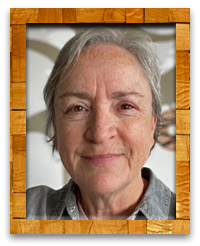
Joan Garrow
Now retired, Joan worked in nonprofit management and fund development for health, education, and social service organizations, and tribal nations. Most recently, she served as the executive director of the Port Gamble S’Klallam Foundation which included stewardship of Heronswood Garden.
Tom Twigg
Tom came to know Duane and Betty Pasco and their ambitions for the JayHawk Institute through his work as a web designer, filmmaker, and photographer—his professional involvement with JayHawk and the Pascos led to a keen interest in seeing their mission succeed.
While living coastally in Alaska and Washington State Tom developed an interest in and respect for Northern and Northwest Native cultures, art, and watercraft (he also worked for a decade as a kayak guide and instructor, and built his own Inuit skin-on-frame replica kayak). Working with the JayHawk Institute to help promote, preserve and share those traditions has been a great honor.